Museums Talk: From the Netherlands
As part of the “Museums Talk: From the Netherlands” program organized in collaboration with the Consulate General of the Netherlands in Istanbul, Istanbul Modern hosted Sjarel Ex, who served as Director of the Boijmans Van Beuningen Museum in Rotterdam from 2004 to 2022; Rein Wolfs, Director of the Stedelijk Museum; Taco Dibbits, Director of the Rijksmuseum; Bregtje van der Haak, Director of Eye Filmmuseum in Amsterdam; and Roos Gortzak, Artistic Director of the Groninger Museum. The last event in the series, to be held on Tuesday, October 27, 2026, will host Emilie Gordenker, Director of the Van Gogh Museum.
FUTURE EVENT
Tuesday, October 27, 2026, 19.00
Quality over Quantity: A New Strategic Direction
Venue: Istanbul Modern Auditorium
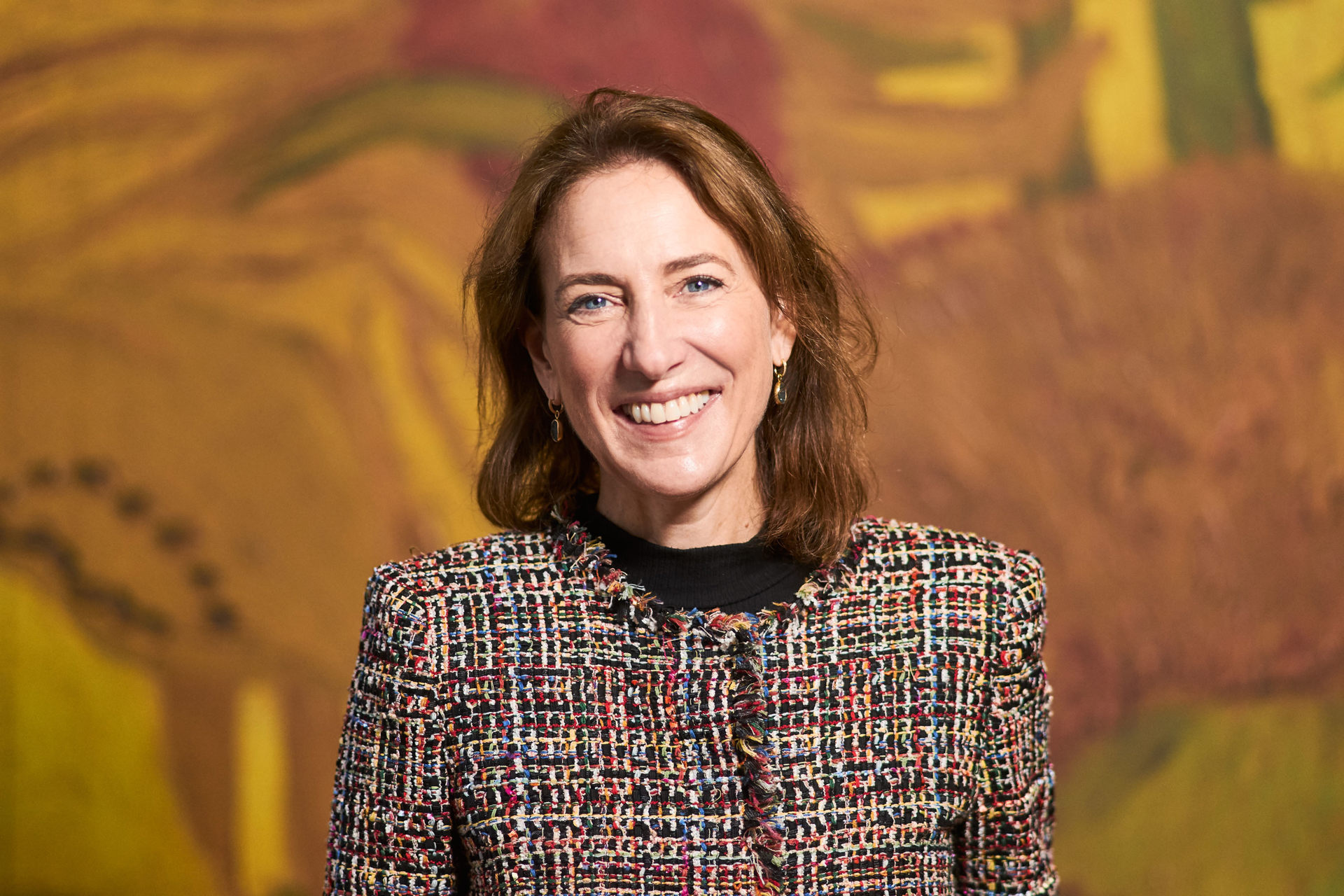
Emilie Gordenker
Director
Van Gogh Museum
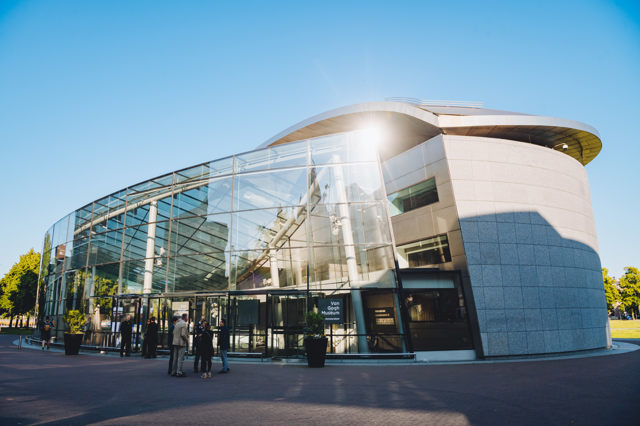
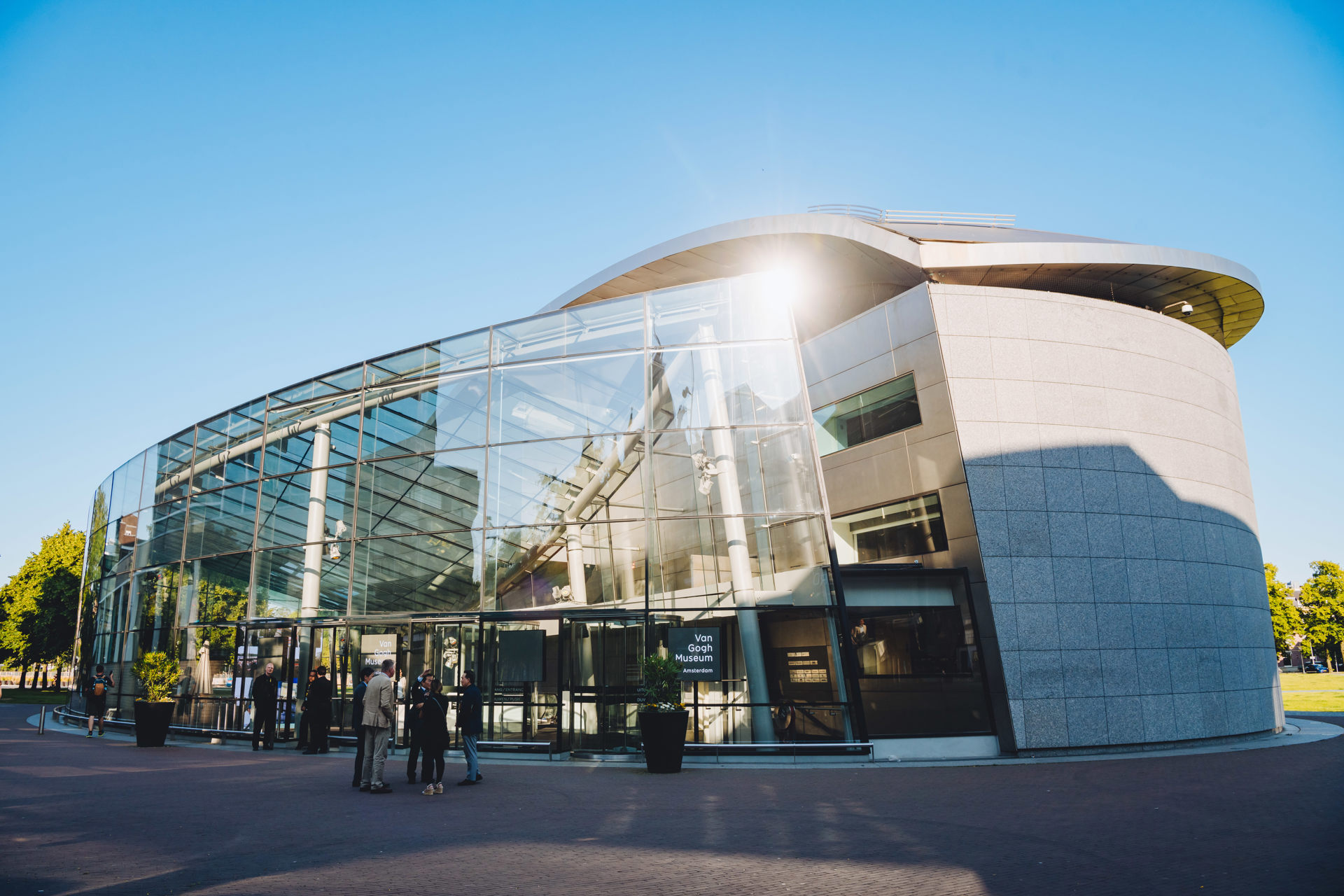
Established through an agreement between Vincent van Gogh’s heirs and the Dutch state, the Van Gogh Museum opened in Amsterdam in 1973. Home to the world’s most comprehensive collection of works by Vincent van Gogh, the museum holds more than 200 paintings, approximately 500 drawings, hundreds of letters, and other works of art assembled by the family over the years. In 1999, a new exhibition wing designed by Kisho Kurokawa was added to the main building, designed by Gerrit Rietveld. A new entrance building opening onto Museumplein was completed in 2015.
An international center of expertise on Van Gogh, the museum presents the artist’s work in relation to that of his contemporaries through its permanent and temporary exhibitions and educational programs. The institution also conducts research into the artist’s life, practice, and oeuvre. Emilie Gordenker has served as Director of the Van Gogh Museum since February 2020. In her talk, “Quality over Quantity: A New Strategic Direction,” Gordenker shares the museum’s distinctive founding story and the strategic approach it has pursued since 2021.
Emilie Gordenker (b. 1965, Princeton, New Jersey, USA) earned her BA from Yale University and completed her PhD at New York University’s Institute of Fine Arts, specializing in 17th-century Dutch and Flemish art. She has held positions at the Metropolitan Museum of Art, the Frick Collection, and the Netherlands Institute for Art History. She has also taught at institutions including Rutgers University, New York University, Vassar College, and the Bard Graduate Center. Before joining the Van Gogh Museum, she served as Director of the Mauritshuis in The Hague, where she led the museum’s major renovation and expansion following her appointment in 2008.
Van Gogh Museum
Photo: Jelle Draper
PAST EVENTS
Wednesday, June 24, 2026, 19.00
Back to the Future
Venue: Istanbul Modern Auditorium
Roos Gortzak
Artistic Director
Groninger Museum
Founded in 1874, Groninger Museum meets its audience with continuously evolving collections and distinctive architectural identity. Its current complex, inaugurated in 1994, brings together designs by Philippe Starck, Michele de Lucchi, and Coop Himmelb(l)au, assembled under the direction of Alessandro Mendini – in close collaboration with former director Frans Haks. For the museum, Mendini adopted a Postmodern approach that combines diverse stylistic languages, foregrounding ornamentation and reinterpretation. The museum has an exciting eclectic collection, ranging from archeological objects, Asian ceramics, fashion and design to art from all centuries.
Since February 2025, Roos Gortzak has served as Artistic Director of the Groninger Museum. In the talk titled “Back to the Future,” she shares the vision she has developed for the institution. Her observations on the museum’s condition at the time of her appointment, together with the steps she has taken toward its transformation, form the core of the presentation. Gortzak also presents examples from her previous curatorial projects, offering insight into the framework of her working methodology. The talk extends beyond the Groninger Museum, opening a broader discussion on how museums can remain relevant within the context of their time.
As a critic, Roos Gortzak has contributed regularly to the Dutch newspaper de Volkskrant and to art magazines such as Metropolis M and ArtReview, as well as writing for exhibition catalogues. As a curator, she has worked with various institutions and events. Between 2014 and 2025, she served as Director of Vleeshal Center for Contemporary Art in Middelburg. Her previous roles include projects with the Puerto Rico Biennial (2004), Stedelijk Museum Bureau Amsterdam (2005), Kunsthalle Basel (2007–2012), Badischer Kunstverein (2014), and the 7th Young Talent Festival, titled “What Happens in Offenbach Stays in Offenbach” (2014).
Tuesday, January 27, 2026, 19.00
Past Forward
Venue: Istanbul Modern Auditorium
Bregtje van der Haak
Director
Eye Filmmuseum
The history of Eye Filmmuseum began in 1946 with the Netherlands Historical Film Archive, founded by a group of Dutch film enthusiasts to preserve art films. Six years after its establishment, the archive moved to the Stedelijk Museum at the museum’s invitation and began engaging the public through curated screenings. In 1972, the museum relocated to the Vondelpark Pavilion, and in 2012, it settled into its current building under the name Eye Filmmuseum. Today, with an international collection of more than 60,000 films, extensive preservation projects, and innovative exhibition and education programs, it is recognized as one of the foremost institutions in its field.
Assuming the directorship in 2023, Bregtje van der Haak focuses on creating relations and synergies through the museum’s unique ability to connect the past, present, and future of film and the moving image arts. In her talk titled “Past Forward,” she explores Eye’s identity as both a singular film archive with a diverse international collection and a dynamic meeting place for makers, as well as a multi-layered presentation space for cinema and experimentation within screen-based arts. She also reflects on the role of the museum’s new building in the gentrifying neighbourhood of Amsterdam Noord and on its commissions situated at the intersection of film and contemporary art. Her talk further addresses how the museum’s mission has evolved over time, its relationship with today’s global political and economic landscape, its vision for the future, and the strong connections it builds with its visitors.
Bregtje van der Haak studied dance, law, and political science before becoming a journalist and documentary filmmaker. She was part of the artistic team for Manifesta 12, the nomadic art biennial held in Palermo in 2018, and has served on the boards of the International Documentary Film Festival Amsterdam (IDFA), the Prince Claus Fund, and the Rijksakademie in Amsterdam. Since 1997, she has produced numerous international documentaries on cultural and social change, initiated collaborative multimedia projects, and held leadership roles at the media organization VPRO and various cultural institutions.
Click here to watch the video of the event.
Tuesday, November 25, 2025, 19.00
The Rijksmuseum
Venue: Istanbul Modern Auditorium
Taco Dibbits
Director
Rijksmuseum
The Rijksmuseum was founded in The Hague in 1798 under the name National Art Gallery. In 1808, the museum relocated to Amsterdam, first housing its collections in the Royal Palace and later in the Trippenhuis, a canal-side mansion. With the completion of its new building at Museum Square in 1885, it was renamed Rijksmuseum, meaning “National Museum.” Over time, the museum expanded through additional buildings and acquisitions, and in the early 2000s underwent a major restoration of its main building that lasted nearly a decade. Today, with a collection of more than one million works – including paintings, sculptures, prints, and historical objects – the Rijksmuseum stands among the world’s leading international museums.
Since 2016, Taco Dibbits has served as General Director of the Rijksmuseum. In his talk, he reflects on the museum’s evolving vision since its foundation and outlines its future direction. He also discusses the process of reopening the museum after its extensive renovation and how this experience has shaped future policies, while addressing how contemporary debates – such as national representation and historical responsibility – affect the museum’s approach.
Trained as an art historian, Dibbits worked as Director of the Old Masters Department at Christie’s in London before joining the Rijksmuseum in 2002 as Curator of 17th-century Painting. He was appointed Head of Fine and Decorative Arts in 2006 and became Director of Collections two years later. Alongside his contributions to numerous academic publications, Dibbits continues to serve in various cultural and arts institutions.
Click here to watch the video of the event.
Tomorrow is Always a Different Day
Venue: Istanbul Modern Auditorium
Rein Wolfs
Director
Stedelijk Museum
The origins of the Stedelijk Museum date back to 1874, when a group of art enthusiasts in the Dutch capital donated a selection from their collections to establish a museum dedicated to modern art. Initially exhibited at the Rijksmuseum, this collection was later moved to a building designed by A. W. Weissman in 1895. In addition to its significant collection and exhibitions, the Stedelijk Museum holds an important place in museum history as one of the first institutions to develop the “white cube” model. Today, the museum continues to carry forward the innovative approach by Willem Sandberg during and after the Second World War, when he was first a curator and later the director.
Rein Wolfs, who became director in 2019, focuses on the museum’s evolution from Sandberg’s time to the present day in his talk titled “Tomorrow is Always a Different Day.” Wolfs reflect on how museums have responded to the rapid and often difficult-to-follow transformations since the Second World War, and how they can prepare for uncertain futures. He also discusses the steps taken at the Stedelijk Museum, which owns extensive modern and contemporary art and design collections, to ensure the representation of regions beyond Western Europe and North America. Wolfs shares how the museum aims to shape its future by critically engaging with and moving beyond its colonial history.
Before joining the Stedelijk Museum, Rein Wolfs held significant positions at various cultural institutions in Germany and Switzerland, including serving as Director of the Bundeskunsthalle (Bonn, 2013–2019), Artistic Director of Kunsthalle Fridericianum (Kassel, 2008–2013), and Director of Exhibitions of the Boijmans Van Beuningen Museum (Rotterdam, 2002–2007). He was also the curator of the Dutch Pavilion at the 50th Venice Biennale in 2003. During his directorship in Bonn, he developed an extensive exhibition program focusing on figures such as Kazimir Malevich, Karl Lagerfeld, Goethe, and the controversial art collection of Nazi art dealer Hildebrand Gurlitt.
Click here to watch the video of the event.
Wednesday, May 14, 2025
17.30 Film screening: DEPOT – Reflecting Boijmans, 86'
19.00 Talk: A New Typology for Museums and Storage
Venue: Istanbul Modern Auditorium
Sjarel Ex
Boijmans Van Beuningen Museum
In his talk, Sjarel Ex focuses on the responsibility of museums to develop independently, while connecting art and artists with society. In this context, he discusses how museums can reach out to society in transparency, introducing new methods, and exploring the museum medium as a platform for improving and developing the human mind and life. Ex advocates a dynamic role and an open mind to change, to make an art institute of importance and to let it flourish. One of the issues to elaborate on is how collections in storage can become more accessible, known, and of importance to the public. In addition, Ex emphasizes how the history of the 175-year-old art museum connects to the urban identity of Rotterdam, with its history of a port city that was and still is welcoming the influences of different cultures.
Before the talk, the documentary DEPOT – Reflecting Boijmans, directed by Sonia Herman Dolz, will be screened. The film focuses on the founding story of the Depot Museum Boijmans Van Beuningen (Depot), known as the world’s first publicly accessible art storage. The documentary reveals the construction process of the Depot through the narratives of Sjarel Ex—he initiated and surveyed the development of the new Depot—together with Winy Maas, one of the founders of MVRDV, the architectural office behind the building. The film, which includes archival material of the first museum building built in the 1930s, also highlights the fundamental objective behind the Depot’s establishment: to better inform the public about the preservation and restoration of art, and how to work in public/private conditions.
Founded in 1849, the Boijmans Van Beuningen Museum houses an international collection of more than 150,000 classical, modern, and contemporary artworks and design objects. The museum takes its name from its two major donors, Frans Jacob Otto Boijmans and Daniël George Van Beuningen. Located in the Museumpark district, where the city's leading museums are located, the museum operates in the Van der Steur Building, inaugurated in 1935 and expanded over time with additions in the seventies by architect Bodon and in the 90s by architects Robbrecht & Daem. The museum, which recently closed its doors temporarily due to renovations, continues to exhibit its collection in traveling exhibitions and at the Depot, which opened in 2021.
Sjarel Ex, who studied art history, specializes in Dutch avant-garde art, particularly the Dutch De Stijl movement, and how De Stijl was influencing the German Bauhaus in its formative years. He was director of the Municipal Museum of Utrecht from 1988 to 2004 and director of Boijmans Van Beuningen Museum in Rotterdam from 2004 to 2022. As an independent researcher, he has published articles internationally and, in addition to curating exhibitions—like “LaLaLa Human Steps” for the Istanbul Modern in 2014—has carried out site-specific projects in public spaces in Rotterdam, Amsterdam, and Utrecht. Since leaving the Boijmans Van Beuningen Museum in 2022, Ex continues his career as an independent curator, writer, and advisor.
Click here to watch the video of the event.
- In collaboration with