Artists’ Film International 2025
Artists’ Film International: Dream States
December 23, 26 and 30, 2025 & January 2, 6, 9, 13 and 16, 2026
14.00
Istanbul Modern Auditorium
Featuring videos, animations, and short films by artists from diverse geographies, Artists’ Film International will be presented to the public for the first time in Istanbul Modern’s new building, beginning in December 2025. Screened on designated days and times in the museum auditorium, which also hosts Istanbul Modern Cinema programs, the selection reflects various interpretations of the theme “Dream States.” Under this title, the program explores the transformative power of dreaming as a space for reflecting on the past and imagining alternative futures. Exploring the dynamic relationship between the personal and the political, “Dream States” presents a range of artistic propositions on how this interaction can inspire change.
At the invitation of Istanbul Modern, “The Pond” (2023), by the artist duo Ahmet Rüstem Ekici and Hakan Sorar, whose works are also included in the Istanbul Modern Collection, is being shown both at the museum and at the program’s 17 international partners. The selection features a broad range of productions, from computer-generated imagery created with artificial intelligence to analog footage, and from videos to animations that transform archival materials. Spanning wildlife, natural history museums, symbolic characters, historical realities, art history, and the transformation of traditions, the program bears witness to the artists’ unique perspectives. Across the works, dystopian scenes, narratives alluding to mythology, memories, and imagined futures unfold like the fragments of a shared dream.
Artists: Abdul Hamid Mandgar (CCAA in EXiLe, Frankfurt, Germany); Ahmet Rüstem Ekici & Hakan Sorar (Istanbul Modern, Türkiye); Anca Benera & Arnold Estefan (n.b.k, Berlin, Germany); Anette Gellein (Tromsø Kunstforening,Tromsø, Norway); Babu Eshwar Prasad (Project 88, Mumbai, India); Cocoy Lumbao (MCAD, Manila, Philippines); Dalia Al Kury (mmag foundation, Amman, Jordan); Elinor O'Donovan (Crawford Art Gallery, Cork, Ireland); Heesoo Kwon (LACE, Los Angeles, USA); Isabelle Nouzha (argos centre for audiovisual arts, Brussels, Belgium); Kialy Tihngang (Tramway, Glasgow, Scotland); Melisa Zulberti (Fundación Proa, Buenos Aires, Argentina); Mykolas Valantinas (CAC, Vilnius, Lithuania); Raffaela Naldi Rossano (GAMeC, Bergamo, Iraly); Sanja Anđelković (Cultural Centre of Belgrade, Serbia) and Sin Wai Kin (Forma & Southwark Park Galleries, London, UK).
Program / Content: Nilay Dursun, Ümit Mesci
About Ahmet Rüstem Ekici and Hakan Sorar:
Artist duo Ahmet Rüstem Ekici and Hakan Sorar combine their backgrounds in interior architecture and engineering with art and technology. Continuing their exploration on the body politics, architecture, and optical perception, the duo interprets the stories conveyed to the present day by archaeological finds through digital visualization techniques. In their collaborative works, they delve deeply into the relationships between space and the body, questioning the boundaries between the digital and physical worlds. They aim to offer viewers a framework of intellectual and conceptual depth through the possibilities offered by technological advancements. The artists’ works have been presented to audiences in Türkiye at international cultural and artistic institutions and platforms, including Istanbul Modern, Mardin Biennial, Sónar +D, SACO Biennial (Chile), YARAT Contemporary (Azerbaijan), and Thessaloniki Queer Arts Festival (Greece).
Guest of 2025:
Ahmet Rüstem and Hakan Sorar
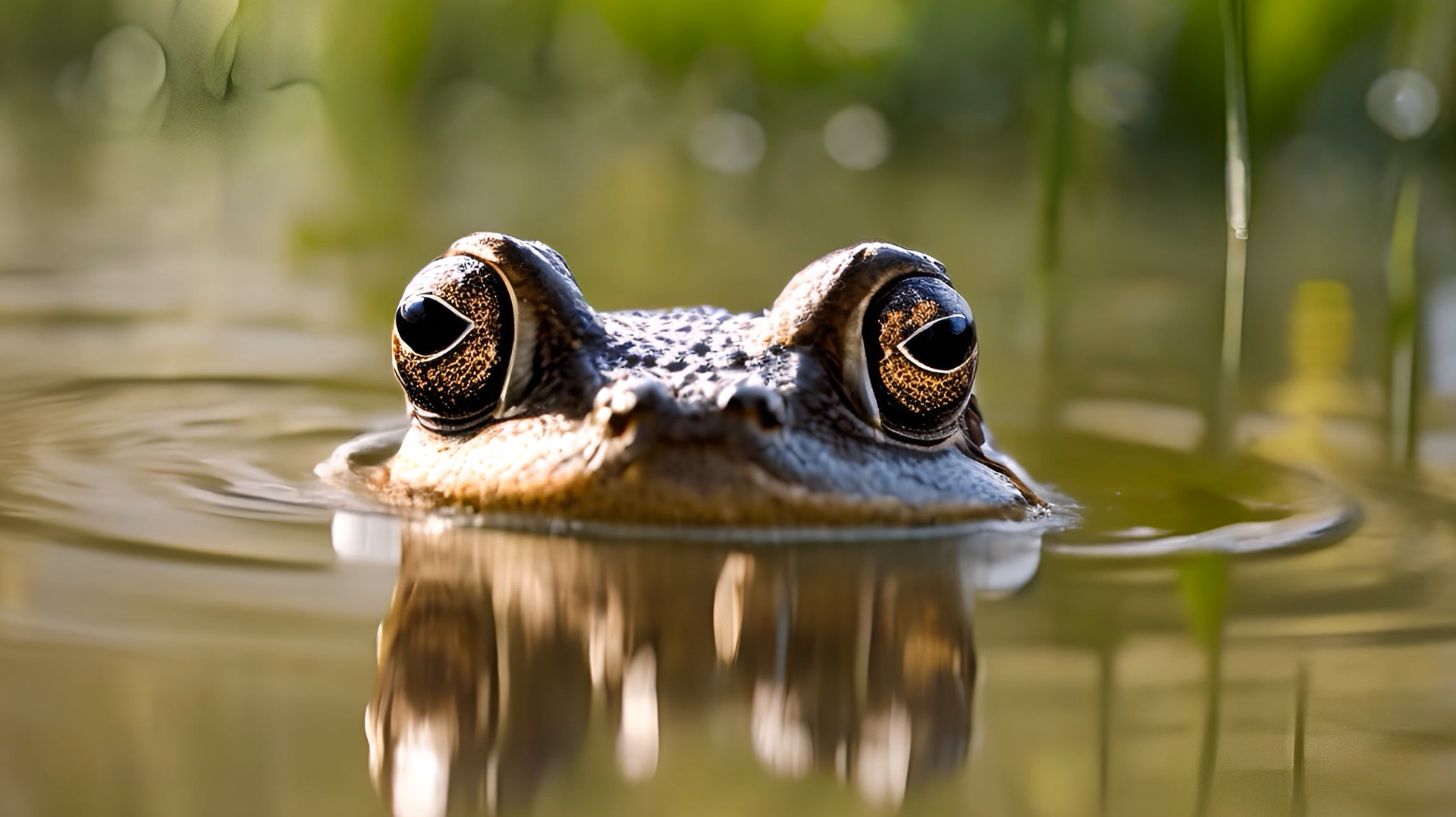
“Pond” (2023) explores transformation, memory, and the human–nature relationship. The AI-generated film draws inspiration from the Seyitömer votive vessels, dated 5,000 years ago, and from the frogs migrating to Palazoğlu Pond. Constructing a world in which natural cycles intertwine with cultural motifs, the work invites the viewer to become part of an undefined reality – suspended between fiction and documentary.
Sanja Anđelković
“Look up! I am no canopy – I am a messenger” (2022) brings together diverse themes, ranging from speculative zoology and entomological studies of insects to Orthodox hymns. Inspired by W. L. Tower’s 1929 book Insect Singers: A Natural History of the Cicadas, the film interweaves religious and mythological narratives with the climate crisis, famine, and contemporary anxieties.
Raffaela Naldi Rossano
“SERPENTINA. Per un museo senza tempo (For a timeless museum)” (2023) takes shape through the Belvì Museum of Natural Sciences on the island of Sardinia and the figure of the gongilo referenced in local thinker Antonio Gramsci’s Prison Letters. This animal, a species of ocellated skink, appears in narratives that straddle the boundary between science and belief. In a work that brings together an abandoned museum space and performative actions, the artist envisions a timeless and alternative natural history museum for this village.
Elinor O’Donovan
The short film titled “Wild Geese 2: Wilder Geese” (2023), a playful response to Mary Oliver’s poem Wild Geese, questions the extent to which the universe is concerned with individuals. With a humorous approach, O’Donovan suggests that the universe is not indifferent to people’s troubles, on the contrary, it is overly concerned. As in her other works, the artist poses alternative questions, offering a glimpse into a parallel reality in which everything is structured differently.
Melisa Zulberti
“Sobre sí mismo (About Itself)” (2023) focuses on the relationship between the body and movement. The artist addresses the body’s experiences of oscillation, falling, and suspension without adhering to a linear narrative. In a dreamlike narration, the boundaries between transience and permanence dissolve, and in constantly shifting spaces, time takes on a cyclical structure. Each fall, which defines and exists within its surroundings, points toward a new beginning.
Heesoo Kwon
“Leymusoom Garden” (2024) draws on what Heesoo Kwon experienced during a spiritual journey from late 2022 to early 2024. The site belonging to the artist’s grandparents in Gongju-si, South Korea, and the location on which Kwon’s home studio is located – known today as San Francisco, yet in fact belonging to the Ramaytush Ohlone people – form the foundation for the digital work. Examining the complexity of relationships and values, the artist embraces healing while acknowledging losses and transformations.
Kialy Tihngang
“Neyinka and the Silver Gong” (2024) offers a critical look at the fact that pre-colonial narratives of Scotland predominantly feature white people. Drawing on the Old Irish term fir gorma, meaning “blue men,” the work focuses on people of North African origin who were enslaved by Vikings in the 9th century and brought to Ireland and Scotland. While questioning how this displaced community might have constructed its own Scottish identity, the artist invites reflection on the fictional nature of national identities.
Sin Wai Kin
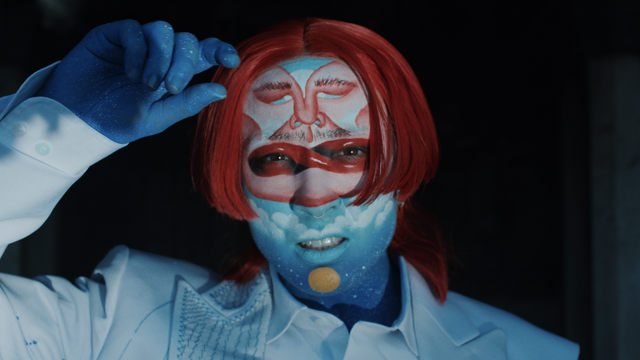
Set in Lahore, Pakistan, at the Alfalah Theatre and the Lahore Fort, “The Fort” (2024) questions the Western Enlightenment’s definition of the ideal human. The video work takes its title from the fortress metaphor in Rumi’s 13th-century Masnavi. Rumi proposes that, in order to end othering, the walls of fortresses, namely structures that appear fixed and closed, must be torn down. Taking this idea as its point of departure, the film invites viewers to unravel Western-centered notions of reality and imagine new fictions.
Mykolas Valantinas
Set in the Lithuanian countryside, “Lullaby’s Fault” (2025) blurs the boundaries between reality and fantasy, building a bridge between past and present. In the film, the twins’ innocent games turning into violence are not shown directly but are depicted through their consequences. Invited into the inner world of a mind fractured by trauma, the viewer witnesses the surreal and fragmented logic of a consciousness in search of healing. Despite its dark narrative, the film also opens a space for emotional unravelling and acceptance.
Abdul Hamid Mandgar
Set in Afghanistan, “Colorless” (2020) tells the story of a young child passionately devoted to dance. Restricted by an older brother who embodies traditional beliefs and social norms, the child stands at the center of the conflict between personal expression and societal constraints. The film reminds us that even in a society where personal freedoms are denied and dreams are suppressed, hope for change can endure.
Anca Benera and Arnold Estefan
Bringing together traditional rituals and military choreography, “Rehearsals for Peace” (2023) places pastoral life and NATO military exercises side by side in the village of Cincu, Transylvania. Employing surreal storytelling, the work carries the legend of Ursula, from the 16th century to today, and interprets the sound of the whip as a tool to drive away evil. While anchoring the idea of peace in the backbone of the work, the film explores the ongoing rehearsals required to achieve it as fragile processes.
Dalia Al Kury
Two sisters living in the diaspora serve as the narrative's main characters in “Levitations” (2024). In the dreamlike video, the sisters journey toward a liberated Palestine during a therapy session. Dreaming finds its counterpart in the film, both metaphorically and literally. Aiming to activate a shared imagination, the work united the reality dominated by violence and oppression with imagined freedom and hope.
Isabelle Nouzha
Depicting a city defined by ruins, “Dystopian Patterns” (2019) presents a landscape emptied of human presence. Constructed like a nightmare witnessed while awake, the video is shaped by the weave of urban memory, history, and surreal narratives. Developing the work through Beirut, a city that has endured disaster time and again, the artist positions the rubble at the center of the cityscape as the narrative's lead protagonist.
Babu Eshwar Prasad
“Dear Chalam” (2024), can be read as a eulogy for the documentary filmmaker, writer, artist, and activist Chalam Bennurkar (1950s–2017), keeping his memory alive through cinema. Centered on individual and collective experiences, the work brings together dreams, memories, and passion for cinema. Interweaving reality and imagination, the narrative conveys longing and shared bonds to the viewer.
Cocoy Lumbao
Drawing on video footage recorded in 1994, “Untitled” (2022) takes the form of a video “letter” sent from parents to their children. Reflecting on migration, nostalgia, and bonds between people, the artist constructs a dream space that allows past and present to be reconsidered. The work highlights how technology has transformed the ways people interact and form connections.
Anette Gellein
Inspired by Kenneth Anger’s Kustom Kar Kommandos (1965), “Dyke Dreams” (2024) pays tribute to this film. The video presents a narrative that shifts from the aesthetics of an advertising film centered on lust to the language of horror cinema. Bringing together themes of the Norwegian oil industry, Americanization, and loneliness in relationships, the work engages the viewer by blurring the boundaries between reality and dream.
Institutions participating in Artists’ Film International in 2025:
argos centre for audiovisual arts, Brussels, Belgium
Center for Contemporary Arts Afghanistan in eXiLe e.V. (CCAA in EXiLe), Frankfurt, Germany
Crawford Art Gallery, Cork, Ireland
Cultural Centre of Belgrade, Serbia
Forma, London, United Kingdom
Fundación Proa, Buenos Aires, Argentina
Galleria d'Arte Moderna e Contemporanea di Bergamo (GAMeC), Bergamo, Italy
Istanbul Modern, Türkiye
Los Angeles Contemporary Exhibitions (LACE), Los Angeles, USA
Museum of Contemporary Art and Design (MCAD), Manila, Philippines
mmag foundation, Amman, Jordan
Project 88, Mumbai, India
Sapieha Palace, branch of the Contemporary Art Centre (CAC), Vilnius, Lithuania
Southwark Park Galleries, London, United Kingdom
Tramway, Glasgow, Scotland
Tromsø Kunstforening, Norway
Video-Forum of Neuer Berliner Kunstverein (n.b.k), Berlin, Germany
Image:
Ahmet Rüstem Ekici and Hakan Sorar, The Pond, 2023
AI-generated video and audio
Full HD, 3’ 25’